The Memorial
A living space of reflection and connection, where remembrance becomes a source of strength for the future.
Many Hands, One Memorial
Designed by Michael Arad, architect of the National September 11 Memorial at Ground Zero in New York City
The design of the Emanuel Nine Memorial began with a simple question:
How could we create a place that honors the Emanuel Nine while keeping Mother Emanuel AME Church at the center?
From the beginning, creating a space with thoughtful proximity to the Church was essential. As was a place that felt welcoming, and connected to the historic character of Charleston.
But the design was shaped by more than the site. Early conversations with the Foundation’s board and design committee led to meetings with survivors, family members, and friends of the Emanuel Nine. Their stories of loss, faith, forgiveness, and struggle became an essential part of both the architect selection and design processes.
Michael Arad of Handel Architects was chosen as Memorial designer and presented his preliminary ideas in 2018. Reverend Eric S.C. Manning counseled him about Mother Emanuel’s long history of persecution and resilience that shaped the faith, grace, and forgiveness demonstrated by the families and congregation following the tragedy of June 17, 2015.
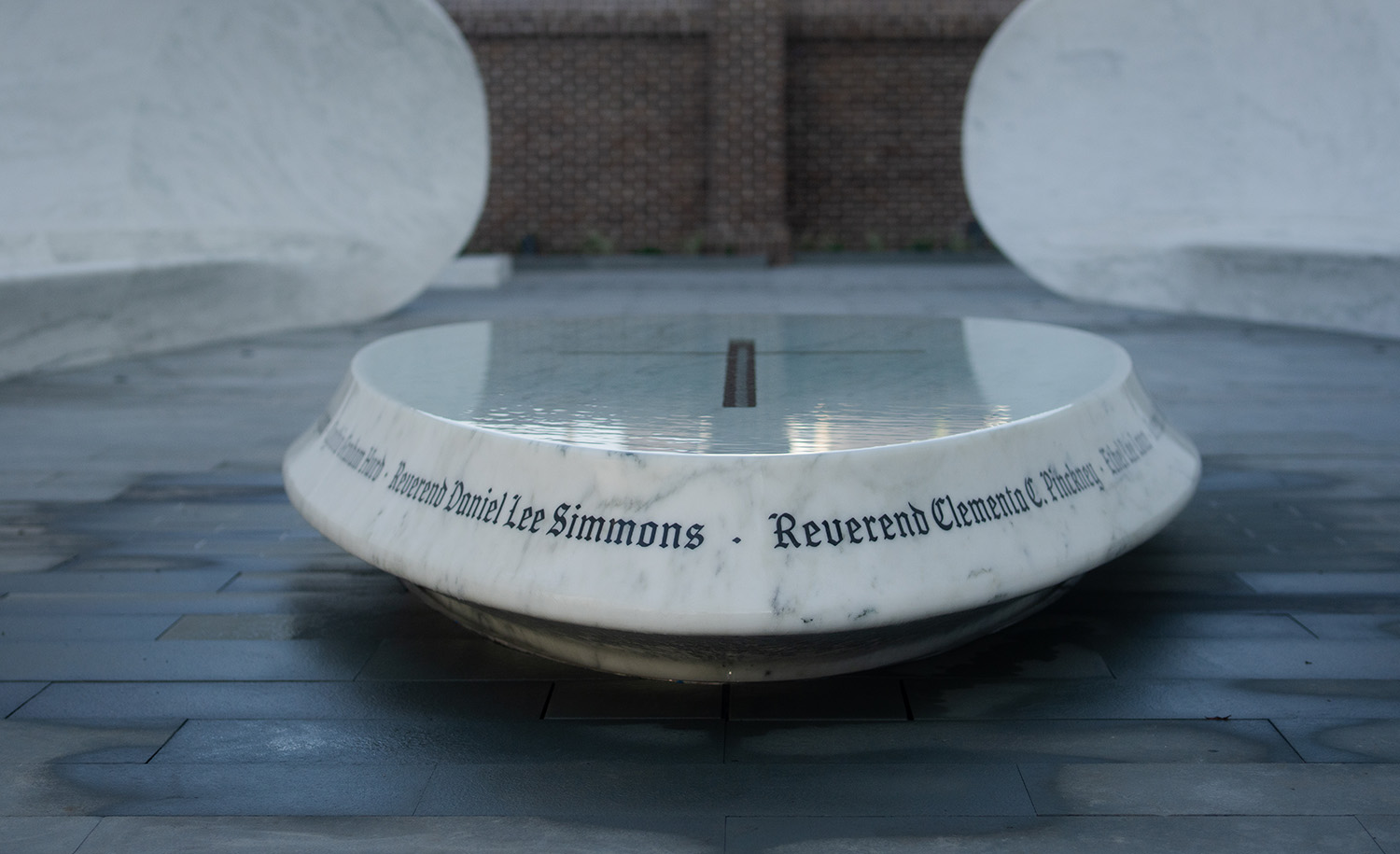
Place for Grace and Fellowship
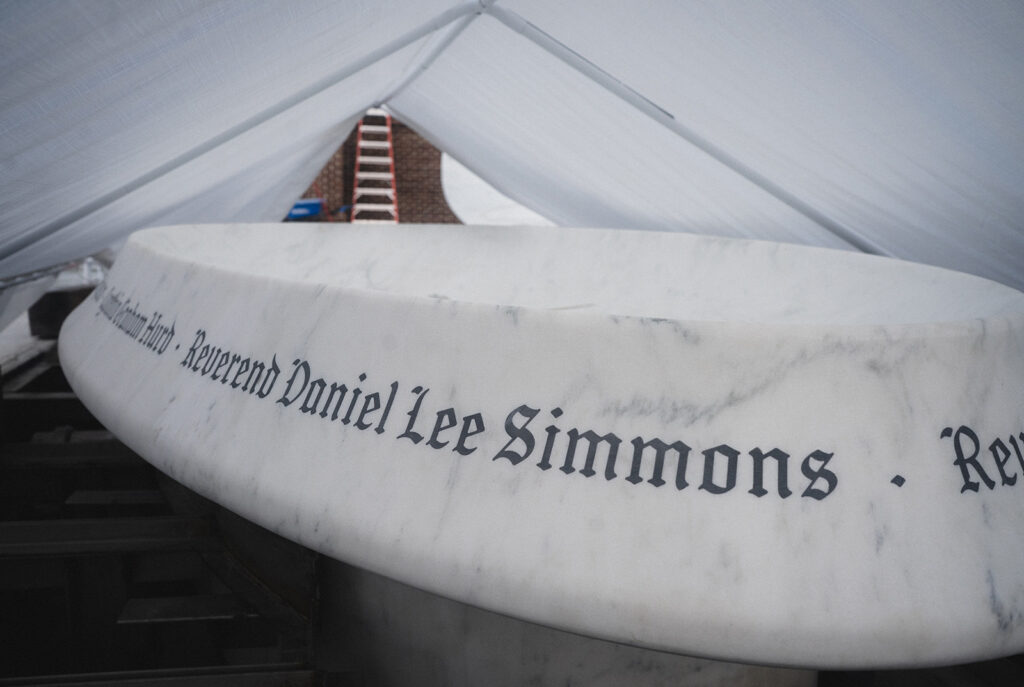
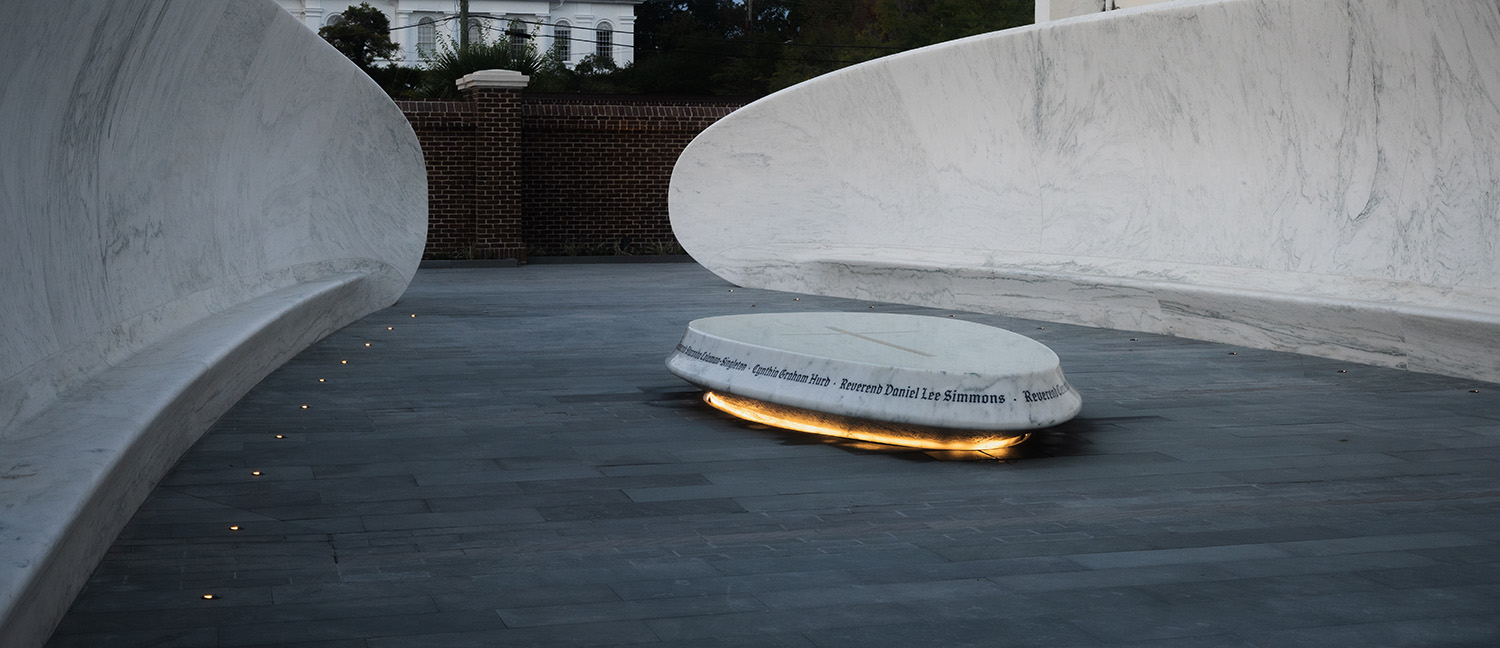
At the heart of the Memorial Courtyard is the Fountain of Grace, bearing the names of the nine. Its simple form—a shallow basin with an opening in the shape of a cross at the center of the bowl—draws water upward and over the rim, where the names are inscribed. The fountain serves as the spiritual center of the courtyard, its flowing water evoking faith, life, and renewal.
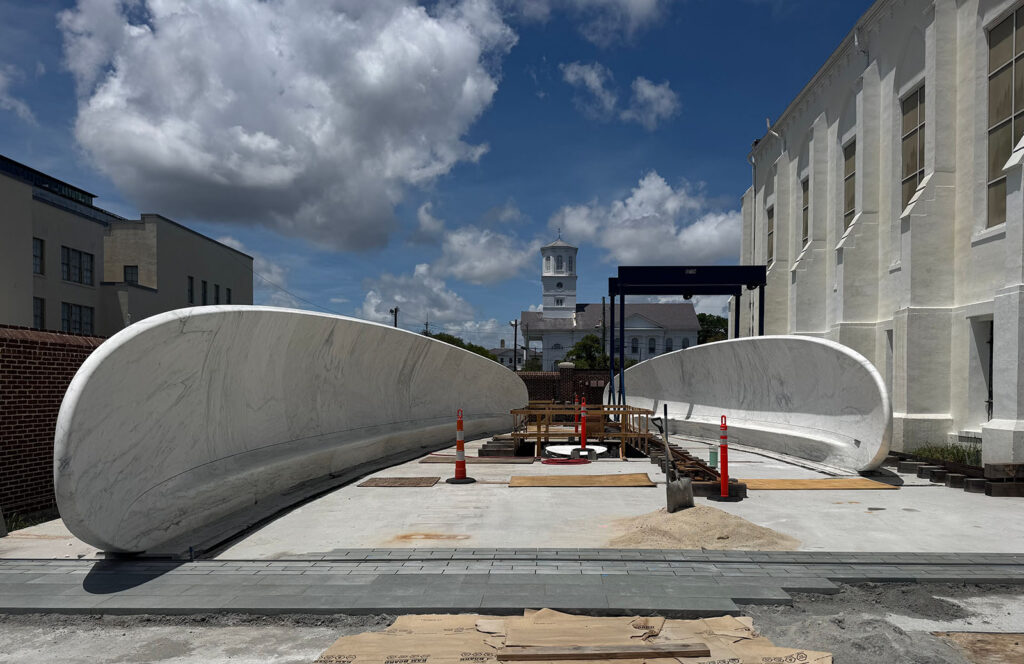
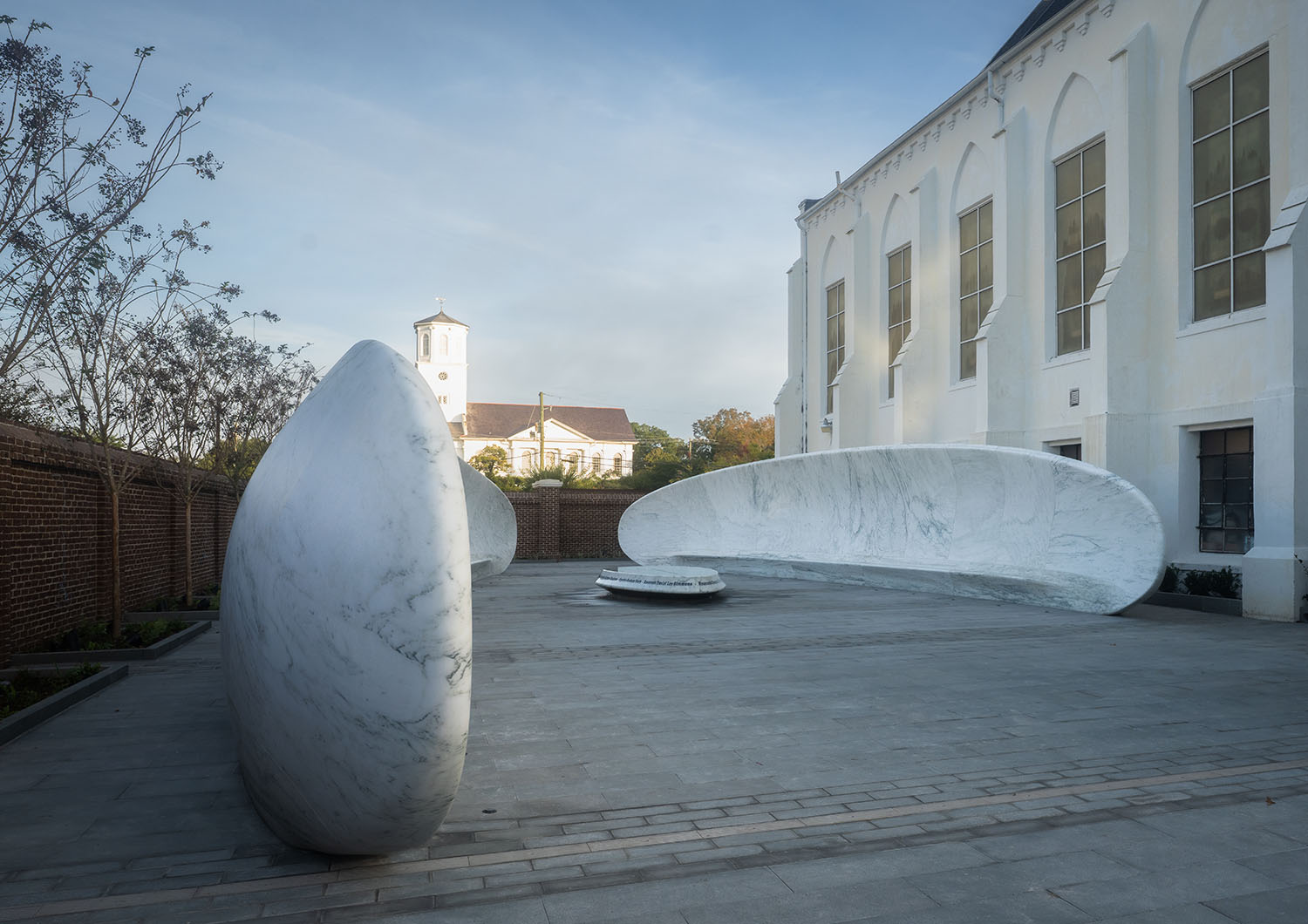
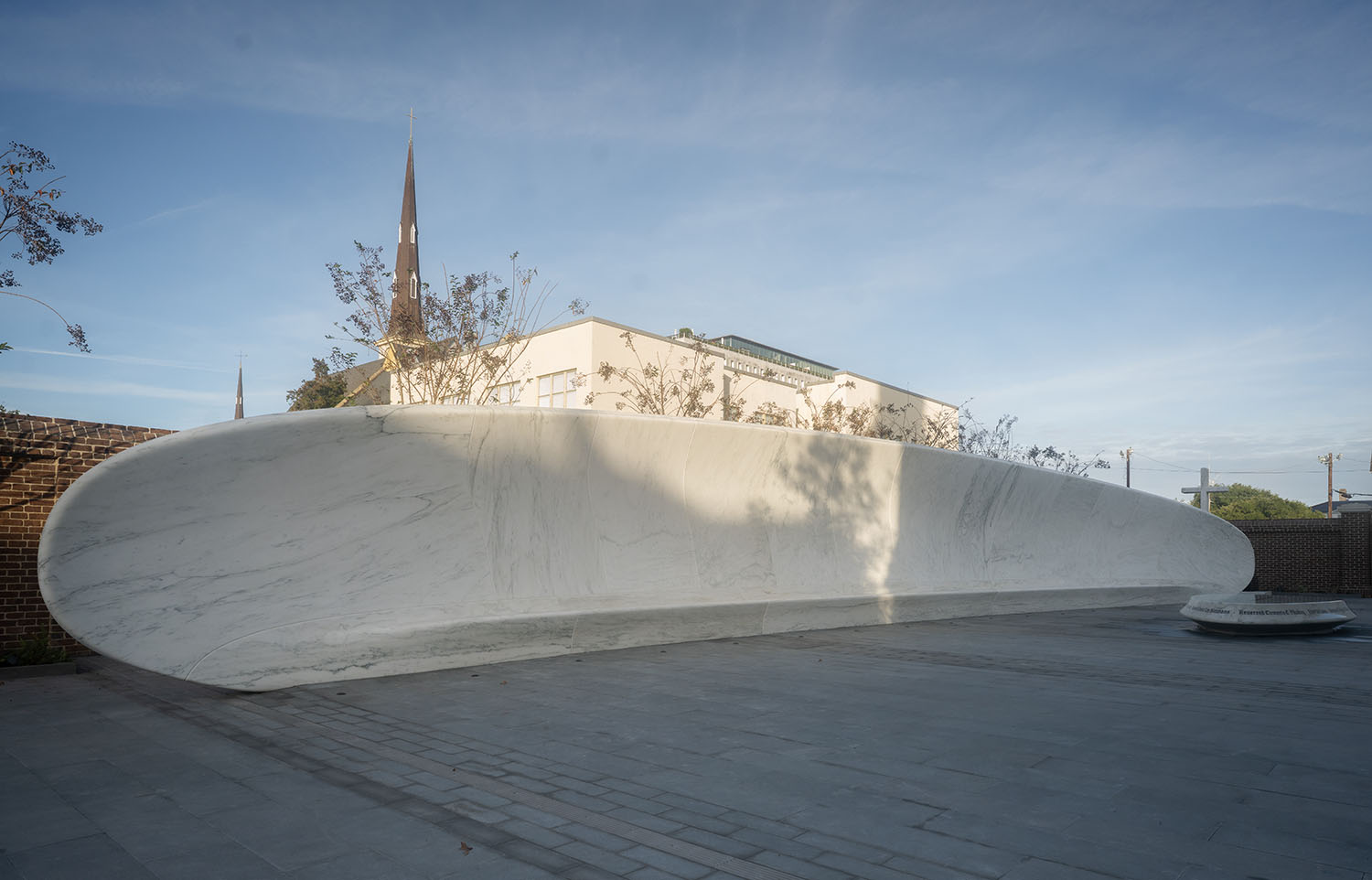
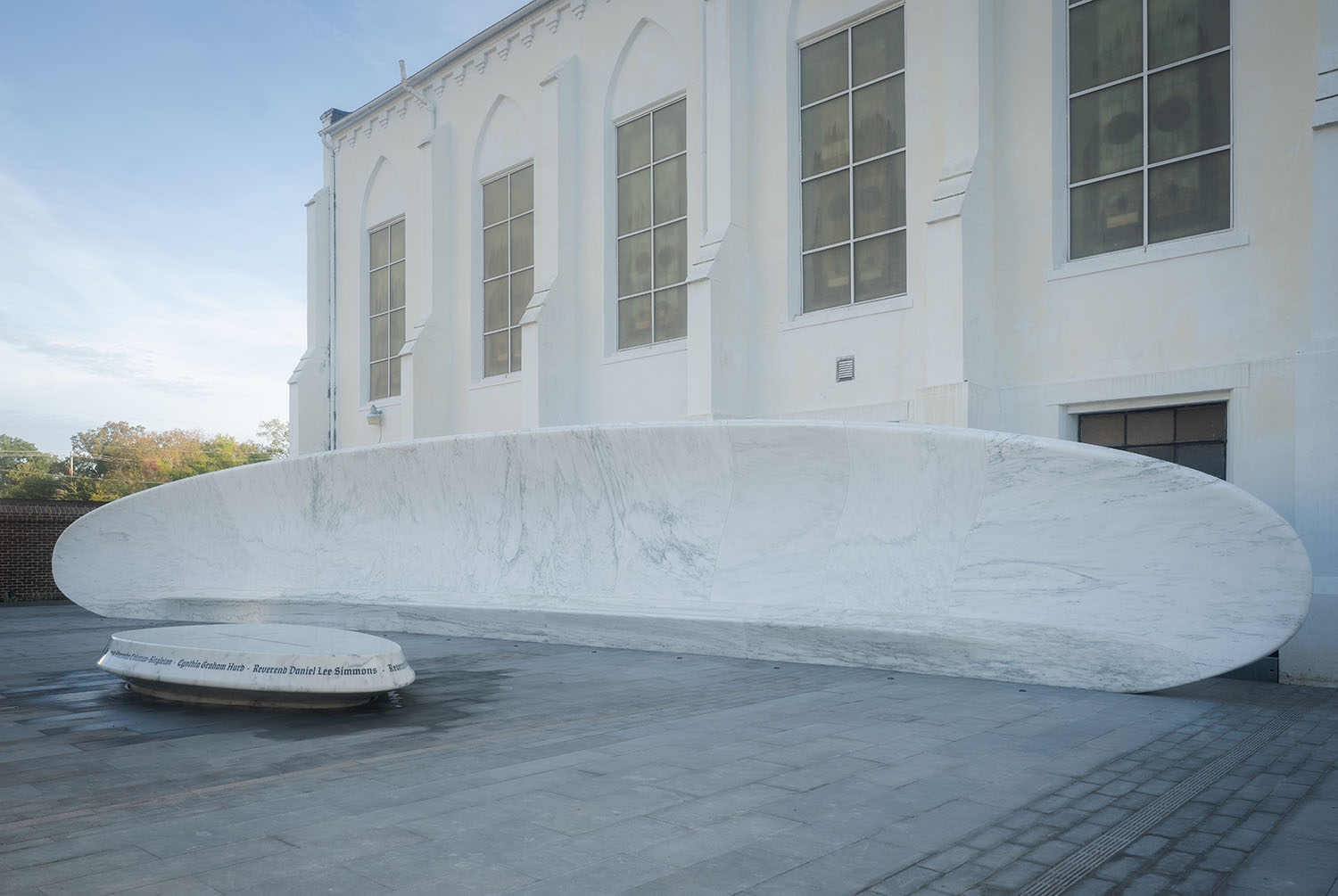
Surrounding the fountain are the Fellowship Benches, whose sweeping curves create a space for gathering and conversation. Their massive interlocking marble sections beautifully embody the strength that comes from community: each element supporting the others.
The courtyard also includes the Cross of Hope, a white marble cross that appears to float above a thin sheet of water continuously spilling over black granite basin. A kneeling stone and a marble bench provide a quiet place for contemplation.
A Community Effort
The Memorial is the result of a decade of vision, collaboration, craftsmanship, generosity, and service. Architects, designers, artists, fabricators, craftspeople, contractors, advisors, volunteers, donors, and countless others contributed their time, expertise, materials, and resources. Many gave their services as a gift. As Michael Arad reflects: “I see a simple commitment by so many people, a commitment to respond to hatred with love and to ugliness with beauty.”
Crafted with Extraordinary Care
Bringing these elements from visions to reality required the skill, dedication, and generosity of many people.
The Fellowship Benches presented extraordinary technical challenges. Massive sections of Danby marble—some weighing more than 45,000 pounds—were quarried in Vermont, fabricated in Wisconsin, and transported to Charleston, where they were assembled piece by piece. The precision of their curved surfaces and nearly invisible joints reflects years of craftsmanship and collaboration.
The wrought-iron gates at the entrance to the Memorial Courtyard were created by Charleston blacksmiths Carlton Simmons and Robert Thomas, connecting the Memorial even more deeply to the city’s artistic and architectural traditions.
Through the imagination of acclaimed graphic designer Michael Bierut of Pentagram, who volunteered his services and came to Charleston to study Mother Emanuel and draw inspiration from the Church.
Survivors' Garden
The next and final chapter of the Memorial is the Survivors’ Garden, a simple landscape marked by five live oak trees—one for each survivor—and six benches.
The Garden acknowledges the Church itself and the extraordinary resilience of its congregation across centuries. While the Memorial Courtyard looks toward the past and honors those who were lost, the Survivors’ Garden looks toward the future—a place to honor the survivors, celebrate life, and reflect on the resilience of a faith that continues to endure.